
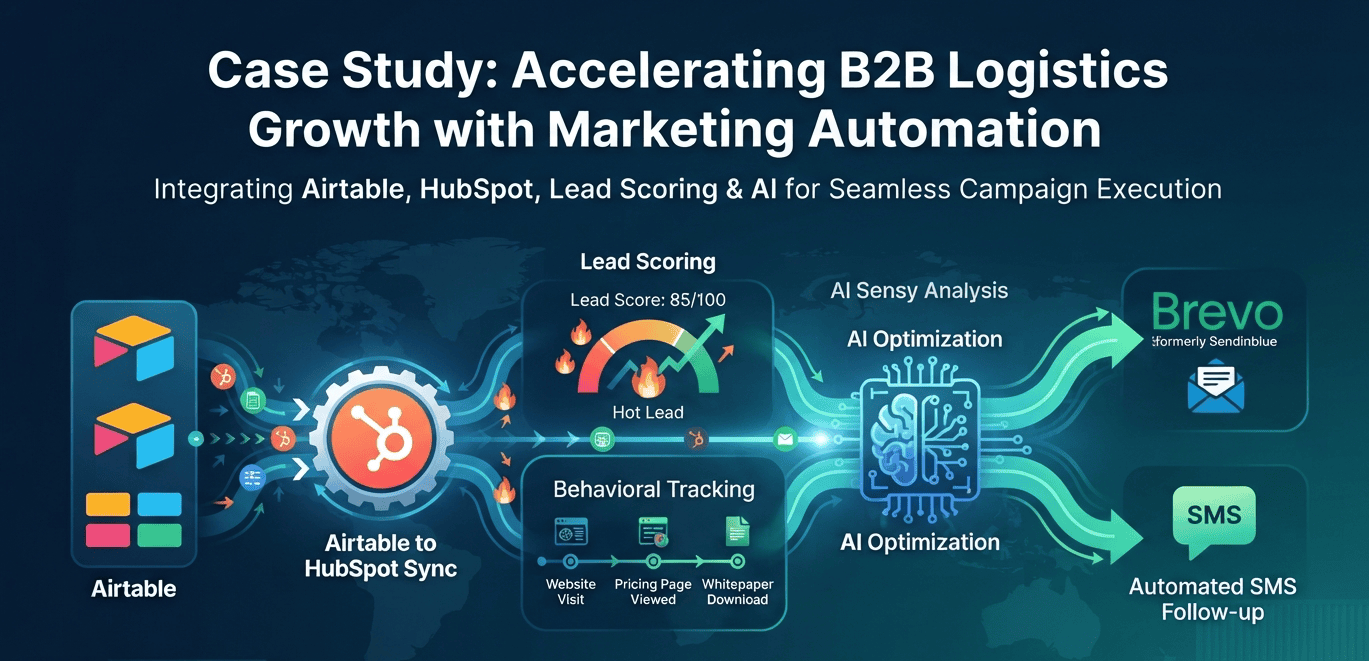
Case Study: How a mid-market B2B logistics SaaS player slashed blended CAC by 34% without an enterprise budget
The Baseline: The Cost of Fragmented Data
One of our client, the high-growth B2B logistics SaaS provider in India, was facing a classic mid-market paradox. They were capturing thousands of inbound intent signals— D2C / e-commerce brands calculating shipping APIs, and enterprise supply chain managers requesting custom quotes.
Yet, their blended Customer Acquisition Cost (CAC) was unsustainably high.
When we audited their infrastructure, the culprit wasn’t their ad creatives or their sales team. It was their tech stack. It was a chaotic web of free tools:
- Inbound leads landed in a Free CRM.
- Marketing data lived in siloed Google Sheets updated manually by interns.
- Email campaigns ran on a basic Brevo tier, completely unaware of what the sales team was doing in the CRM.
- Fragmented automation routines were built on various free Make.com accounts, constantly hitting task limits and breaking silently.
- Sales team was also updating contact records in CRM manually as per CEO’s mandate given to them
The biggest bleeding point? Data formatting variance. In India, users enter phone numbers in a dozen different ways: 91XXXXXXXXXX, +91 XXXXX-XXXXX, or just the 10-digit string. Because the systems couldn’t talk to each other cleanly, duplicate profiles proliferated. Sales reps were calling leads who had already bounced, and marketing was sending generic onboarding emails to enterprise prospects who should have received custom enterprise pricing.
The Blueprint: Engineering a High-Yield Stack on a Budget
We avoided the temptation to recommend massive enterprise platforms. Instead, we re-architected their entire flow using agile, low-cost systems designed to act like a premium enterprise setup.
Step 1: Building the “Lego-Block” CDP (Data Cleaning)
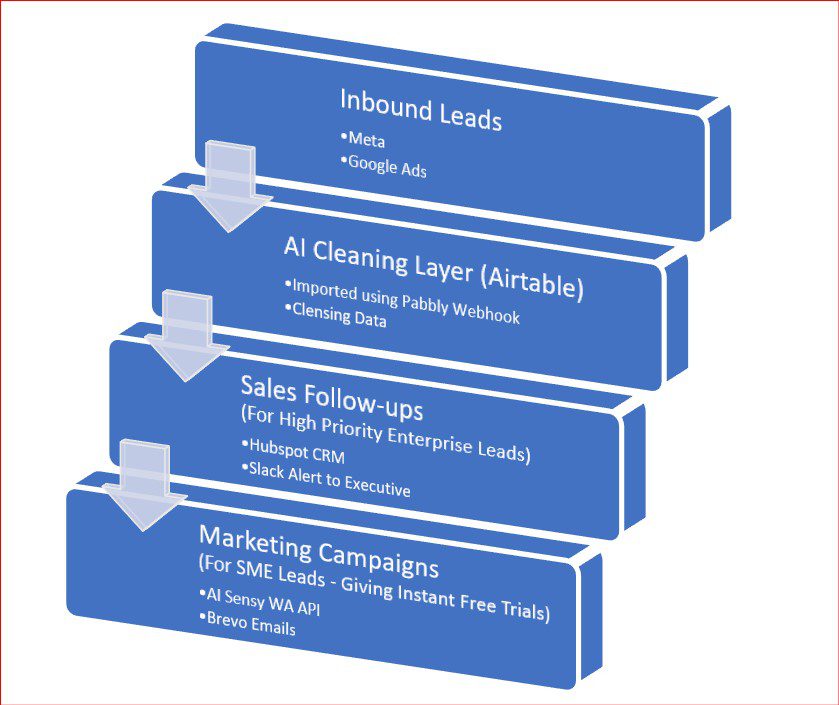
We routed all inbound lead data via Pabbly Connect into a centralized, highly structured database layer using Airtable.
Before any lead hit a sales rep’s desk, we deployed automated formatting scripts. The system instantly normalized all phone numbers to the strict E.164 international standard (+91XXXXXXXXXX), deduplicated matching records against corporate email domains, and cross-referenced company names against open-source business registries to automatically flag company size.
Step 2: The Pabbly Workflow Engine
Instead of paying per-step premiums on premium automation tools, we utilized Pabbly Connect to handle multi-step internal routing. Pabbly listened for new, cleaned entries in the data layer and executed a real-time fork:
- If the lead was an enterprise logistics head: It instantly populated HubSpot CRM, assigned a high-value predictive score, and triggered a Slack alert to the account executive.
- If the lead was a mid-sized D2C merchant: It routed them to Brevo for nurture and instantly initiated a conversational sequence via AISensy.
Step 3: Localized Lifecycle Orchestration
If a prospect used the online shipping calculator but left before booking a demo, Pabbly detected the abandonment in the data layer. Within 7 minutes, AISensy sent a personalized WhatsApp message containing a dynamic link populated with the exact freight routes they had just searched.
The Business Outcomes
By replacing manual data handling with an automated, clean data loop, the company achieved measurable operational efficiency within 90 days:
- 34% Reduction in Blended CAC: Ad spend on Meta and Google became hyper-efficient because the algorithms were fed clean, deduplicated conversion data rather than fragmented, duplicate signals.
- 72% Reduction in Lead Response Time: High-intent enterprise leads moved from webform to a sales rep’s radar in less than 45 seconds.
- 4.2x Surge in Trial Activation: The WhatsApp cart-abandonment style flow for the shipping API converted passive web traffic into active trial users at a fraction of the cost of retargeting ads.
Is Your Stack Built for Efficiency or Leakage?
This transformation proves you don’t need an enterprise budget to achieve enterprise-grade marketing ROI. You just need your systems to speak the same language.
If you want to see how this exact data-mapping framework and routing architecture can be mapped onto your current business model, let’s look at your stack.